
Socially acceptable addictions
Turns out, we're all addicted to something...

“Our time needs more than devout, Church-going people who avoid serious wrongs (or at least the wrongs that are easily recognized for what they are) but who seldom do anything constructive or positively good. It is not enough to be outwardly respectable.”
- Thomas Merton, Life & Holiness.
It’s hard to miss how hard it is out there. Most major metro areas are experiencing what the West Coast has known for decades—something is deeply wrong. More homeless people are in major metro areas all across the country.
And it’s crazy how many Southern and Midwestern cities are starting to feel like LA, San Francisco, Portland, or Seattle.
Many of these poor souls are victims of an inequitable economic system, and they were just the “bottom line.” Some were dreamers, who headed West, in pursuit of the American dream and the pursuit of happiness itself…and their dreams never panned out.
Some fell into addiction. When life is that hard, the temptation to leave this world, if only for a moment, is far too real.
Substance abuse is at an all time high, and as we head into more economic turbulence, addictions often grows worse as people struggle more.
And then, consider all the new forms of addiction: where you once had to traverse to the desert of Las Vegas to gamble, now the desert has gone nationwide. As of this writing, thirty-eight states now allow you to place bets directly from your phone. With the ease of swiping, you can gamble on sports teams.
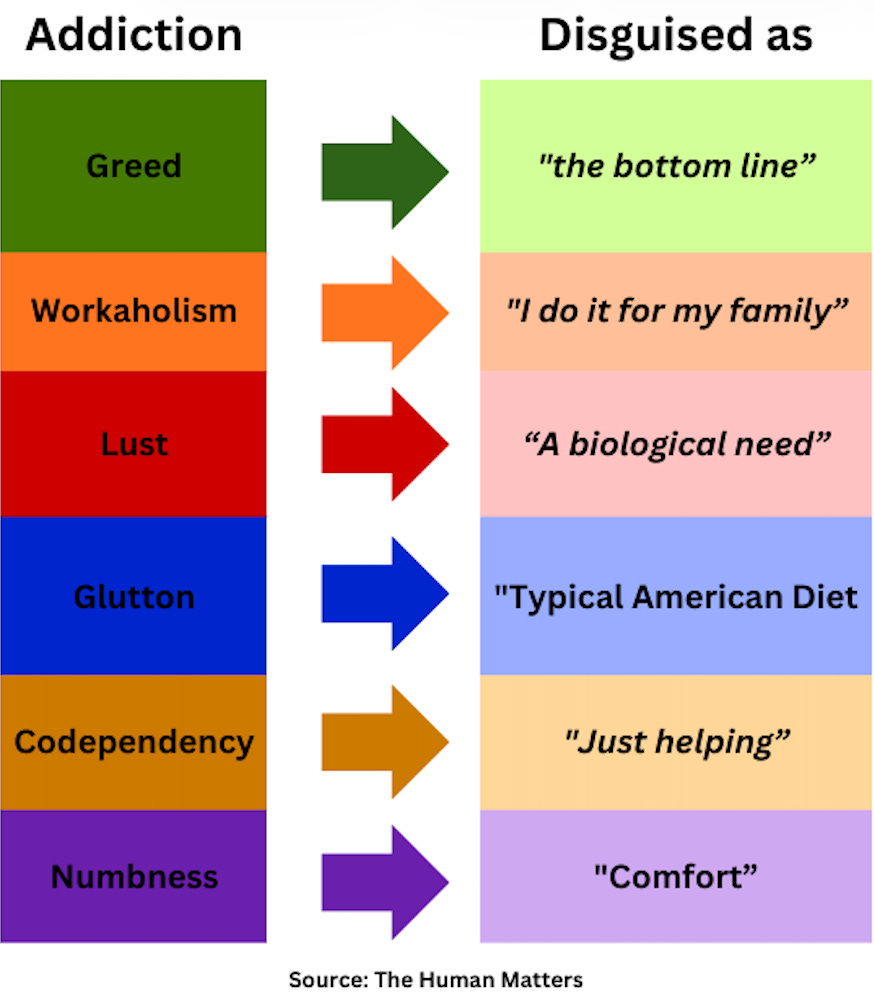
But what I find most fascinating are not the apparent and very obvious addictions, but the less obvious addictions that our culture not only haz but but downright encourages:
The American economy is built on consumerism and materialism — it tells us we need something outside ourselves, or a newer model, to fix our problems and find happiness…and the next, and the next, and the next…
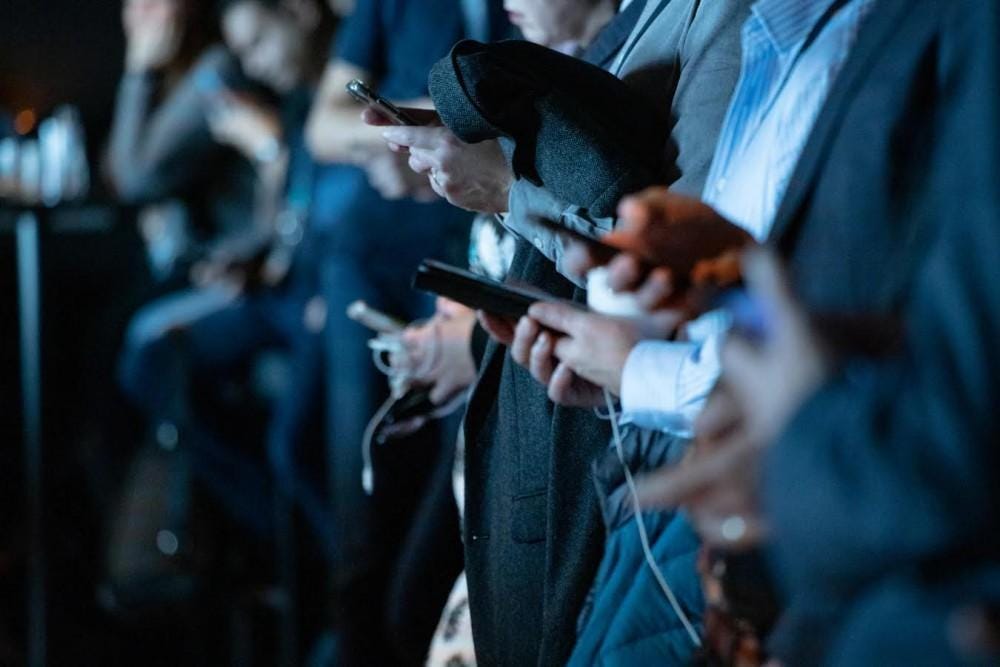
If our attentions aren’t gorilla glued to our phones, then they’re waiting for our drugs to arrive…even illicit drug dealers aren’t as fast as Amazon.
The addictions pop out in consumeristic expectations. Just watch any “Karen” not get the entree to their table in time, and notice the response — exactly like a junkie who’s gone too long without a hit.
So many of our casual addictions are not just acceptable, but the standard of living.
Acceptable addictions camouflage the truth
Pick your poison, but for me it’s workaholism and success. And when I hit the office building, I’m not greeted by the 12 Step counselor — no sir! I’m rewarded all the way to the top of the corporate ladder.
Nobody may get hurt by my indulgence to this addiction (at least not directly or visibly). It’s nonetheless a sign of a disordered soul. Can I really say I’m living while I white-knuckle my way up the corporate ladder?
I pay my bills, take care of the family, get to appointments on time…I’m not addicted.
Because my addiction runs parallel with the culture, I’m empowered to keep going. But I’m not okay.
Taken to an extreme, any good thing ceases to be good.
Socially acceptable addictions are reinforced with tangible benefits (higher pay, praise, identity, etc).
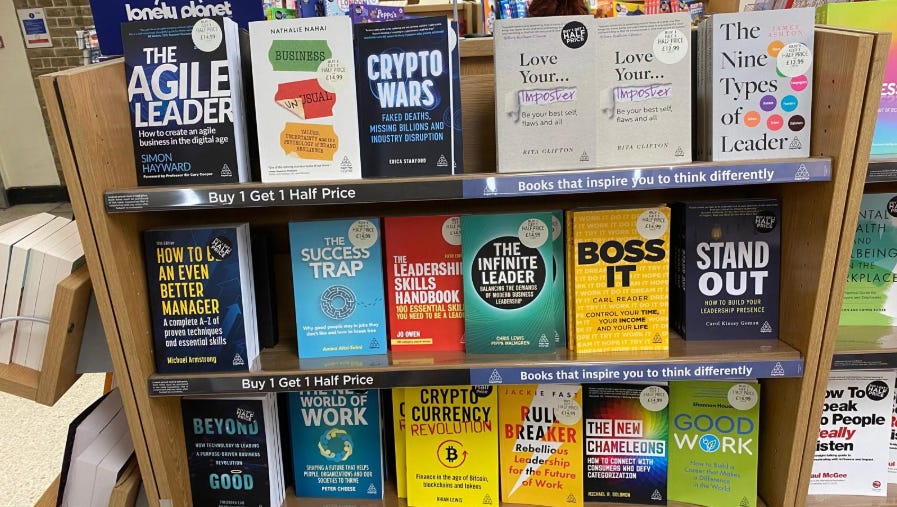
Imagine the strange society that encourages everyone to shoot up heroin, every day, and write books on “3 Easy Steps to Increase Your Daily Heroin.” It slaps you in the face it’s so obvious; but if you’ve ever been through an airport bookstore, it’s almost exclusively about business success—the socially acceptable drug of choice for workaholics.
And at a meta level, all addictions are addictions to stories we tell ourselves, and when that story fails I just have to trust the medicine will eventually kick in…this is just how the world works and because it’s working out for me (paying my bills, few speeding tickets) I’m fiiiiine.
But what if I was born in France or Italy? Another culture that sees workaholism for what it is, and condemns it (France has a four day work week). My addiction would run counter to the culture at large.
I’m lulled into a an illusion that I am somehow different and better than an “addict.” Since I pay my mortgage and my life doesn’t implode spectacularly.
But my addiction is far more nefarious…I have a grenade tucked under my pillow and I’m living a lie that everything is fine because everything is peaceful right now.
I’m actually powerless.
Until I hit a wall, I persist in the notion that my addiction empowers me — a false control.
A person does have total control over their own choices, but we have almost none beyond that. And as long as the system feeds my socially acceptable addictions, I persist in the false notion…and any one thing can send my world crumbling.
We are all addicts
When someone hits rockbottom they find out a hard truth— they’ve have an illusion of control. Addiction tempts us to a false hope, that we can control the uncontrollables of life.
But it can’t.
And we resort to the addiction. Again, and again…
Until it no longer works.
Addiction feels like we have power over reality itself (“I get paid for running my body into the ground…so what’s the problem?”).
And my socially acceptable addiction is far worse, because I can get high on this illusion for my entire life and never know it. A heroin addict learns very quickly they have no control — but with a bonus and sweet corporate package…I’m TOTALLY in control.
This is probably what the core idea of Western Christianity’s “original sin” meant, that we all come into this world addicted, and needing help. It’s not original badness, as the Eastern Christian point out, but an addiction. That is why the Eastern Church views the Church as a hospital — rehab for the soul, helping us to work through the withdrawals.
