
Ikon of Humanity: Thomas Merton
What this American monk can teach us about being human

On the last day of January 1915, under the sign of the Water Bearer, in a year of a great war, and down in the shadow of some French Mountains on the borders of Spain, I came into the world. Free by nature, in the image of God, I was nevertheless the prisoner of my own violence and my own selfishness, in the image of the world into which I was born. That world was the picture of Hell, full of men like myself, loving God and yet hating Him; born to love Him, living instead in fear and hopeless self-contradictory hungers.” - Thomas Merton, Seven Story Mountain
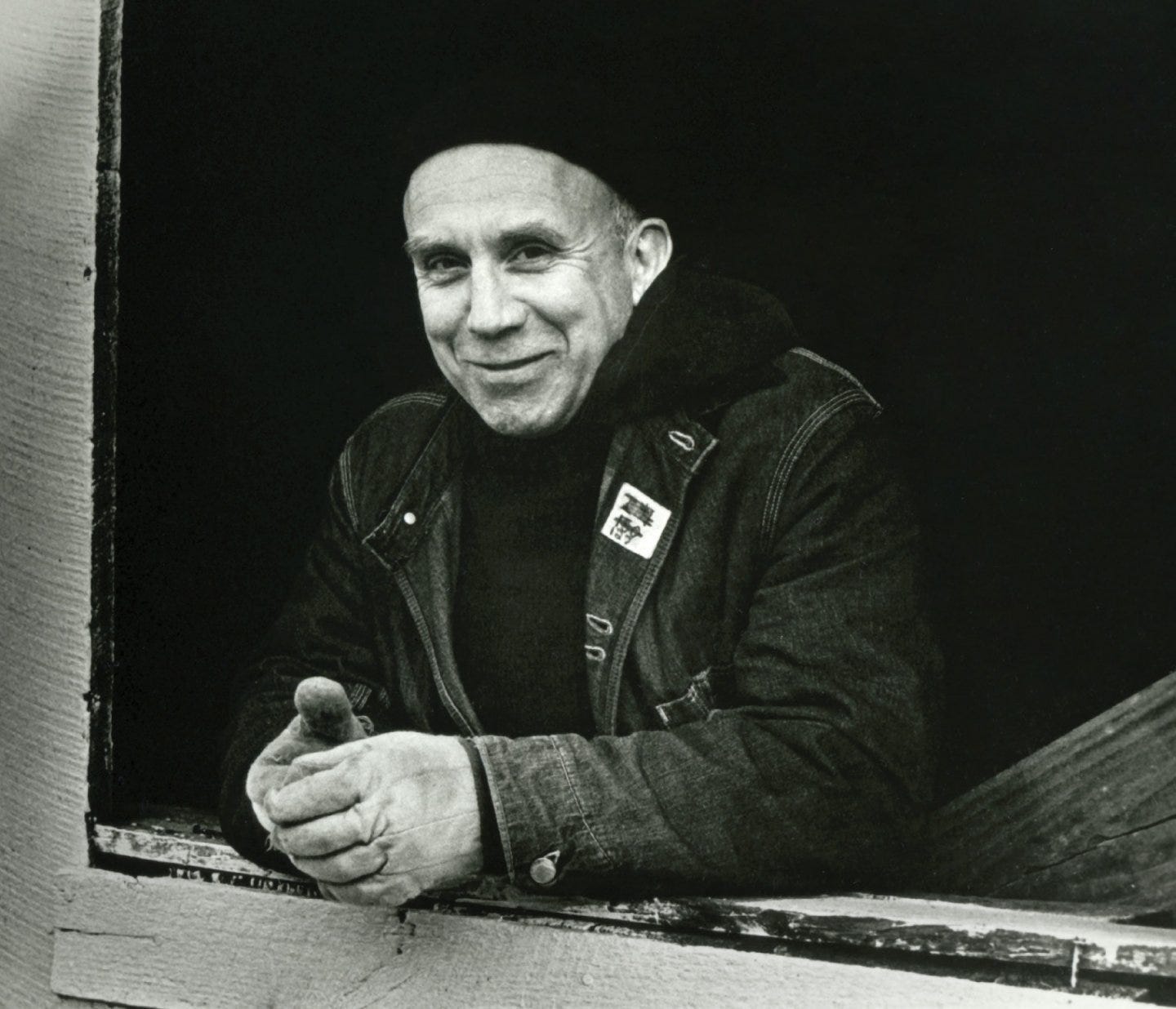
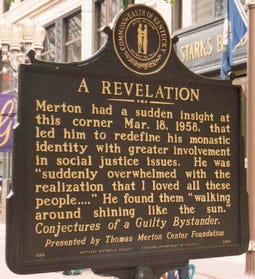
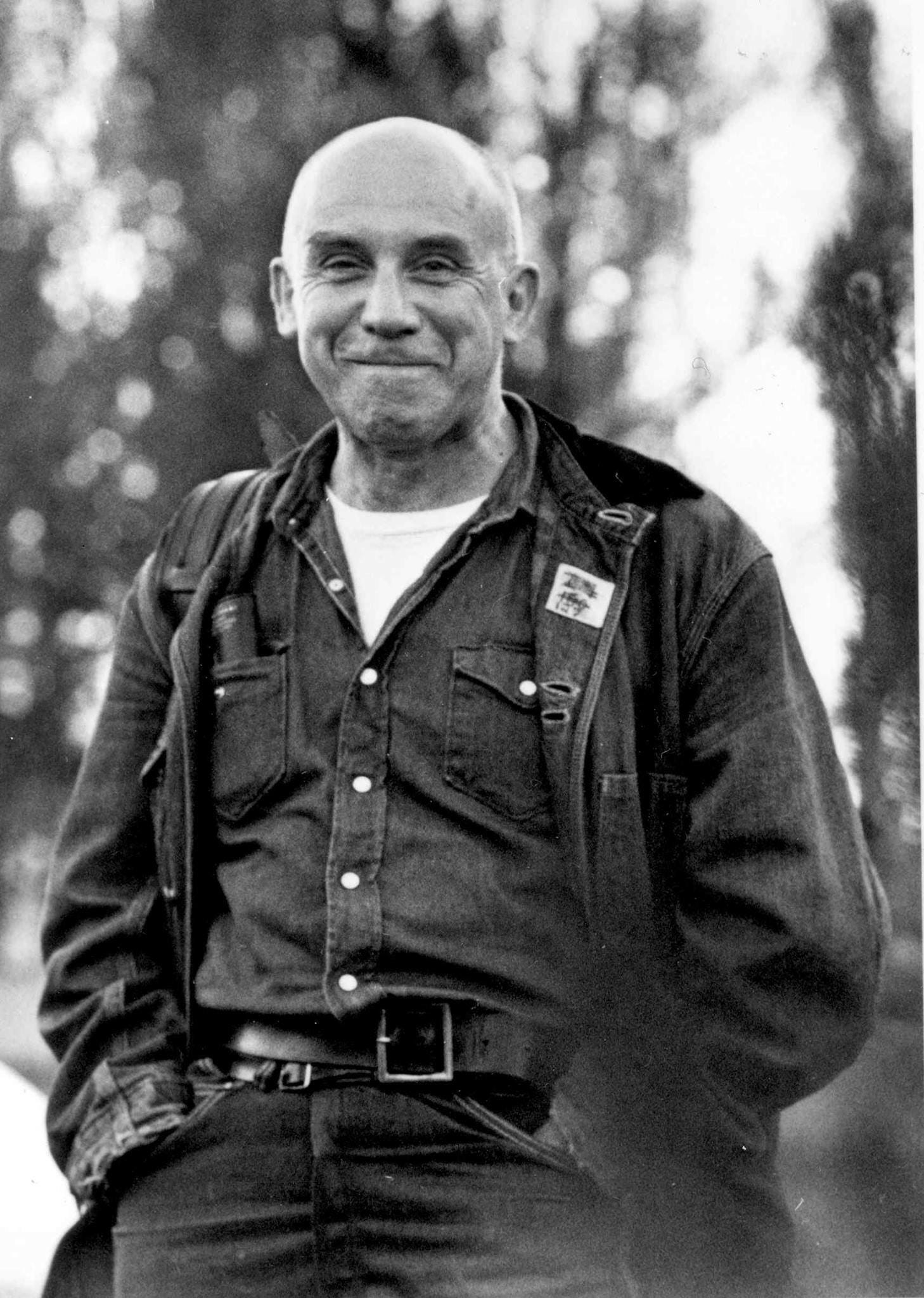
In 1958, a Thomas Merton travelled to downtown Louisville, Kentucky. Looking around, he saw people shuffling around in their daily business…but as bright as the sun. Their splendor stunned him. He saw in them the light that animated all of existence itself.
The monk’s heart was opened to a deeper truth — the beauty of every person that walks the earth.
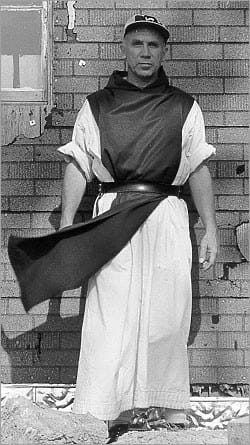
Monks of the Cistercian order (or “Trappist” as they’re commonly called) drench themselves in silence and solitude so that their cells might become like the furnace of Babylon “in which, in the midst of flames, they found themselves with Christ.”1
When Merton emerged from his solitude for a brief moment, the Love he found behind the cloister walls of his monastery was shining through the people in the streets.
Make ready for the Christ
Whose smile like lightening,
Sets free the song of everlasting glory
That now sleeps in your paper flesh
Like dynamite.

- The Collected Poems of Thomas MertonMerton’s Story
Merton was born in France to a New Zealander father and an American mother. He was precocious and worldly, even at a young age.
He was bound to write in some capacity, but his soul longed for wholeness. Something was missing, and he felt the pull of monastic vocation was his path to finding himself.
The draw into Catholicism started with a book on medieval theology, and unbeknownst to him, it was Catholic theology — the conflation of the two angered Merton who was sincerely atheistic.
The book argued that being itself is found in God, that the ground of all matter is loved into existence, at every second of every moment.
God then was not some object to know, like you could learn to study gorillas in the African jungles. No, everything was literally within God, and God was animating everything that is… this radically different notion pierced his heart and set in motion the course of his life.
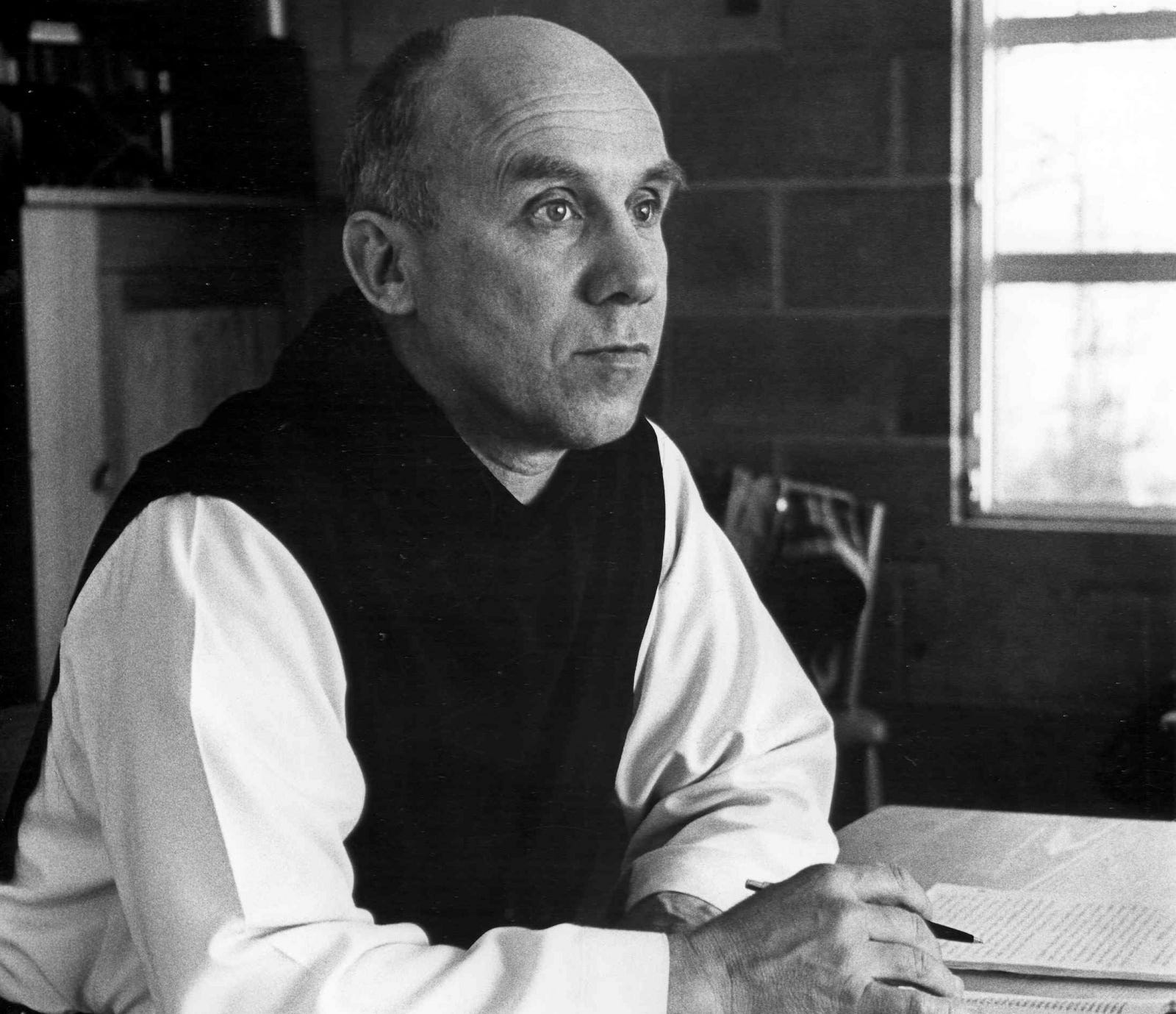
“My Lord my God, I have no idea where I am going. I do not see the road ahead of me. I cannot know for sure certain where it will end. Nor do I really know myself, and the fact that I think I am following your will does not mean that I am actually doing so. But I believe that the desire to please you does in fact please you…And I know that if I do this you will lead me by the right road, though I may know nothing about it. Therefore I will trust you always though I may seem to be lost and in the shadow of death. I will not fear. For you are ever with me, and you will never leave me to face my perils alone.” - Thoughts in Solitude
Top Quotes
“Do not be too quick to condemn the man who no longer believes in God, for it is perhaps your own coldness and avarice, your mediocrity and materialism, your sensuality and selfishness that have killed his faith.”2
“For me to be a saint means to be myself. Therefore the problem of sanctity and salvation is in fact the problem of finding out who I am and of discovering myself.”3
“What can we gain by sailing to the moon if we are not able to cross the abyss that separates us from ourselves? This is the most important of all voyages of discovery, and without it all the rest are not only useless but disastrous.”4
“If I had a message to my contemporaries it is surely this: be anything you like, be madmen, drunks, and bastards of every shape and form, but at all costs avoid one thing: success…if you are too obsessed with success, you will forget to live. If you have only learned how to be a success, your life will probably have been wasted.” - Merton’s reply on a request for self-help book on how to be successful
“Our life, as individual persons and as members of a perplexed and struggling race, provokes us with the evidence that it must have meaning. Part of the meaning still escapes us. Yet our purpose in life is to discover this meaning, and live according to it. We have, therefore, something to live for.”5
“Before you can be a saint you have got to become a human.”6
“The beginning of love is the will to let those we love be perfectly themselves, the resolution not to twist them to fit our own image. If in loving them we do not love what they are, but only their potential likeness to ourselves, then we do not love them: we only love the reflection of ourselves we find in them”7
“To hope is to risk frustration. Therefore, make up your mind to risk frustration.”8
“A ‘faith’ that merely confirms us in opinionatedness and a self-complacency may well be an expression of theological doubt.”9
“The idea seems to be that there is a great Catholic revival in this country and that the future of the Church depends on us. That is all news to me. If we are supposed to be reviving, where are our saints?”10
“One of the moral diseases we communicate to one another in society comes from huddling together in the pale light of an insufficient answer to a question we were afraid to ask.”11
“No amount of technological progress will cure the hatred that eats away the vitals of materialistic society like a spiritual cancer. The only cure is, and must always be, spiritual.”12
“We find God in our own being which is the mirror of God.”13
“If you hate the enemies of the Church instead of loving them, you too will run the risk of becoming an enemy of the Church, and of Christ; for He said: ‘Love your enemies,’ and He also said: ‘He that is not with me is against me.’ Therefore if you do not side with Christ by loving those that He loves, you are against him.”14
“This is a country whose center is everywhere and whose circumference is nowhere. You do not find it by traveling but by standing still.”15
“For in this world it is not good to be eager for the achievement of anything, even of the best of ends; and one who knows by experience that God is always present everywhere and always ready to make himself known to those who love Him, will not quickly prefer the uncertain value of human activity to the tranquility and certitude of this infinite and all important possession.”16
“Since nothing that can be heard is God, to find Him we must enter silence.”17
“The poet enters into himself in order to create. The contemplative enters into God in order to be created.”18
“If you want to understand the social and political history of modern man, study hell.”19
“The experience of twentieth-century dictatorships has shown that it is possible to for some Christians to life and work in a shockingly unjust society, closing their eyes to all kinds of evil and indeed perhaps participating in that evil at least by default, concerned only with their now compartmentalized life of piety, closed off from everything else on the face of the earth. Clearly, such a poor excuse for religion actually contributes to blindness and moral insensitivity, and in the long run it leads to the death of Christianity in whole nations or whole areas of society. It is this no doubt that has led to the great modern problem of the Church: the loss of the working class.”20
“Even our mistakes are eloquent, more than we know.”21
“But love laughs at the end of the world because love is the door to eternity and he who loves God is playing on the doorstep of eternity, and before anything can happen love will have drawn him over the sill and closed the door and he won’t bother about the world burning because he will know nothing but love.” Sign of Jonas
The End…
“What is serious to men is often very trivial in the sight of God. What in God might appear to us as ‘play’ is perhaps what He Himself takes most seriously. At any rate the Lord plays and diverts Himself in the garden of His creation, and if we could let go of our own obsession with what we think is the meaning of it all, we might be able to hear His call and follow Him in His mysterious, cosmic dance. We do not have to go very far to catch echos of that game, and of that dancing. When we are alone on a starlight night; when by chance we see the migrating birds in autumn descending on a grove of junipers to rest and eat; when we see children in a moment when they are really children; when we know love in our hearts; or when, like the Japanese Poet Basho we hear an old frog land in a quiet pond with a solitary splash…provide a glimpse of the cosmic dance.
For the world and time are the dance of the Lord in emptiness. The silence of the spheres is the music of a wedding feast. The more we persist in misunderstandings the phenomenon of life, the more we analyze them out into strange finalities and complex purposes of our own, the more we involve ourselves in sadness, absurdity and despair. But it does not matter much, because no despair of ours can alter the reality of things, or stain the joy of the cosmic dance which is always there. Indeed, we are in the midst of it, and it is in the midst of us, for it beats in our very blood, whether we want it to or not. Yet the fact remains that we have been invited to forget ourselves on purpose, cast our awful solemnity to the winds and join in the general dance.”22
Wisdom of the desert.
New Seeds of Contemplation
New Seeds of Contemplation
Wisdom of the Desert
No Man Is An Island
New Seeds of Contemplation
No Man Is An Island
New Seeds of Contemplation
New Seeds of Contemplation
Sign of Jonas
No Man is an Island
Thoughts in Solitude
Thoughts in Solitude
New Seeds of Contemplation
New Seeds of Contemplation
New Seeds of Contemplation
New Seeds of Contemplation
New Seeds of Contemplation
New Seeds of Contemplation
Life & Holiness
Sign of Jonas
New Seeds of Contemplation